A slow hiring process doesn’t just frustrate candidates—it costs you top talent. Learn 10 proven ways to speed up recruitment without sacrificing quality.
Table of Contents
- Why Speeding Up Recruitment Process Matters in a Competitive Job Market
- Start With a Targeted Job Description
- Leverage Internal Talent Auditing First
- Use Data to Screen Candidates Faster
- Structure Your Hiring Process From Day One
- Improve the Interview Process
- Fast Doesn’t Mean Careless
Why Speeding Up Recruitment Process Matters in a Competitive Job Market
In a competitive job market, top talent doesn’t stay available for long. The best candidates are often juggling multiple job offers—and if your hiring process drags, they’ll move on. A slow hiring process sends the wrong message: that your organization is indecisive, disorganized, or simply not serious. You may also lose out on better candidates who are in high demand and likely to accept offers from faster-moving employers.
Research shows that companies with efficient hiring systems are more likely to attract quality candidates and deliver a better candidate experience. And in an era where employer branding is everything, the way you hire says a lot about how you operate internally. Authentically showcasing your company culture can further attract top talent and improve recruitment outcomes.
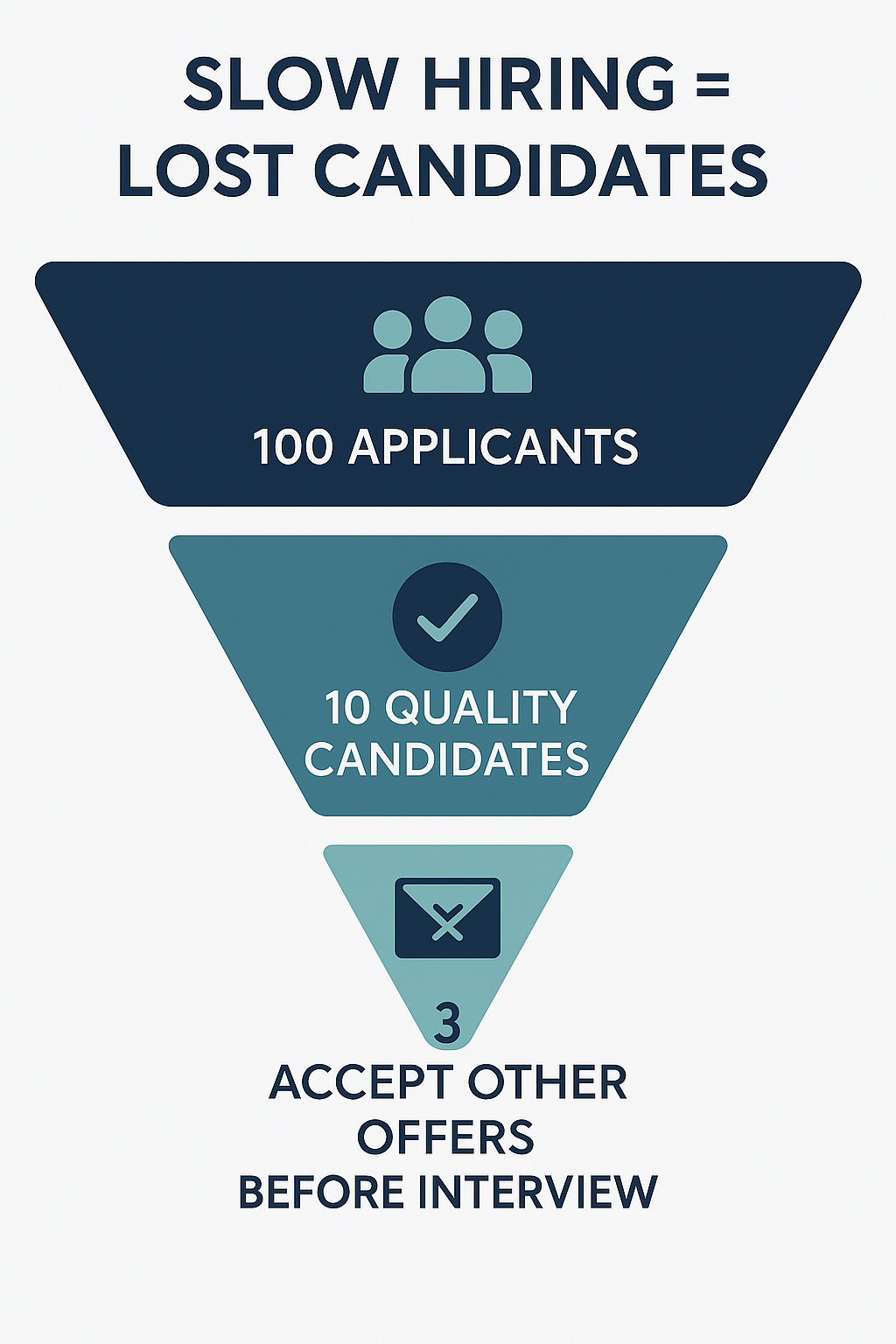
Speed also reduces hidden costs. The longer a position remains open, the more pressure your existing team feels—and the more likely they are to burn out, delay deliverables, or disengage.
Start With a Targeted Job Description
If your job posting sounds like it could apply to any company, you’re already slowing down the recruitment process. Creating tailored job descriptions for each role is essential—well-crafted job descriptions act like a magnet, pulling in qualified candidates and filtering out those who aren’t a match.
Be specific about the job title, job responsibilities, and core skills. Include non-negotiables such as certifications or years of experience. This sets expectations early and reduces the number of misaligned applications that waste time during the application process.
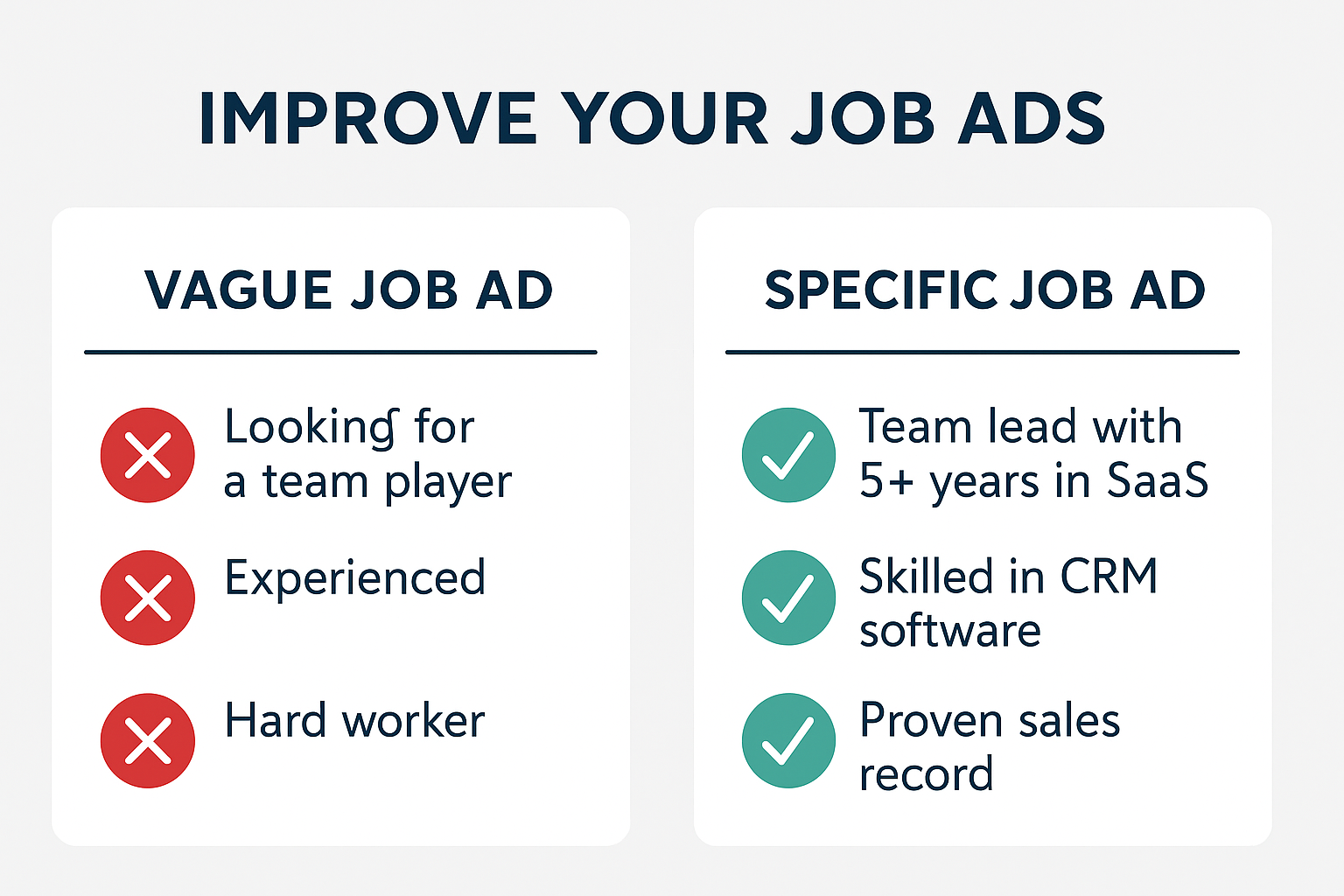
Vague job descriptions often result in low quality applications and poor applications, which slow down the recruitment process and make it harder to identify the right candidates.
Instead of saying: *“Must have leadership skills,”*Say: “Must have experience managing a team of 10+ in a cross-functional environment.”
Clarity breeds precision. And precision helps you move faster—especially when your hiring team is sorting through hundreds of applications.
Don’t forget to post your opening on the right job boards and job websites where your ideal candidates actually spend time. And make sure your careers page and employer brand messaging are consistent across platforms.
Leverage Internal Talent Auditing First
Before you launch an external search, ask yourself: Could this open position be filled internally? Conducting an internal talent audit can uncover high-potential employees who are ready for the next step. Promoting from within shortens the hiring cycle, strengthens morale, and reduces onboarding time.
It’s faster because your team already knows the culture, tools, and expectations. It’s smarter because internal hires often ramp up more quickly—and you avoid starting from zero with someone unfamiliar.
This doesn’t just benefit your timeline. It reinforces a culture of growth and opportunity, which strengthens retention and engagement.
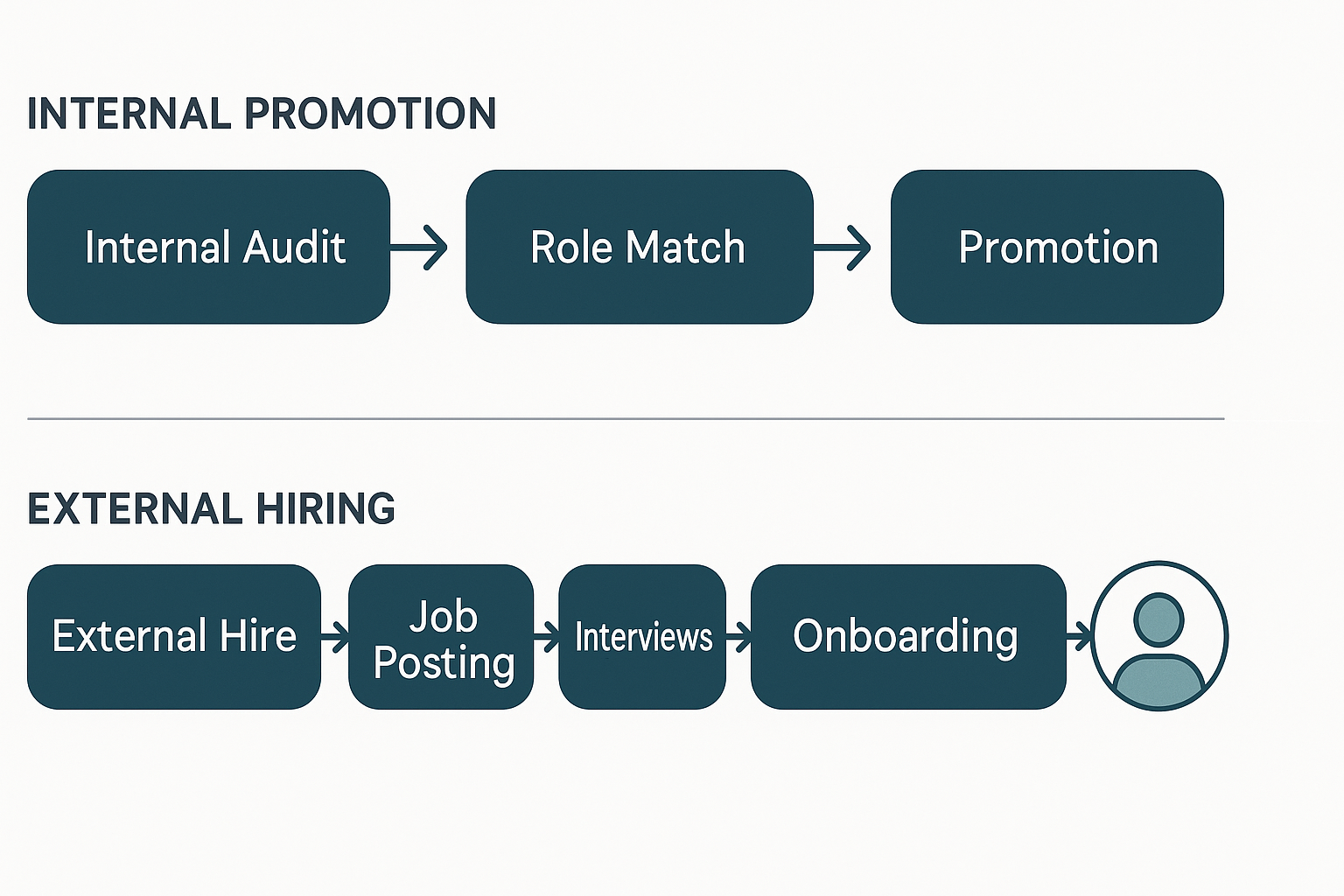
To make internal promotions part of your strategy, build them into your hiring process steps and create a simple system for tracking readiness across departments.
Use Data to Screen Candidates Faster
Resumes can only tell you so much. Gut instinct? Even less. If you’re relying on manual reviews alone, you’re wasting time and missing red flags. Data-driven tools—like OAD’s scientifically validated assessments—help you make faster, smarter decisions during the screening candidates phase.
Pre-employment tests offer a clear window into whether a candidate actually fits the role. You’ll see how they align with required behaviors, communication styles, and work preferences before the first phone interview stage even begins.
One OAD client in the healthcare space reduced their applicant to interview ratio by 40%—simply by adding assessments to the early application process. They no longer waste time with candidates who look great on paper but lack the core attributes for the role.

When the data is this clear, you don’t have to second-guess. You act. Leveraging data-driven tools allows you to process faster and make more informed decisions.
Build a Quality Talent Pipeline in Advance
If you’re waiting until a position opens to start recruiting, you’re already behind. The fastest hiring teams build a quality talent pipeline ahead of time—so when a need arises, they’re ready. A strong talent pipeline enables you to fill job openings more quickly and efficiently, reducing time-to-hire and ensuring you don’t miss out on top talent.
A strong pipeline includes both active and passive candidates. That means staying visible at industry events, job fairs, and offline events. It also means using your careers page, social media networks, and programmatic advertising to engage talent year-round.
Better yet, keep tabs on high-potential contacts in talent databases. Track their career changes, stay in touch, and reach out before competitors do.
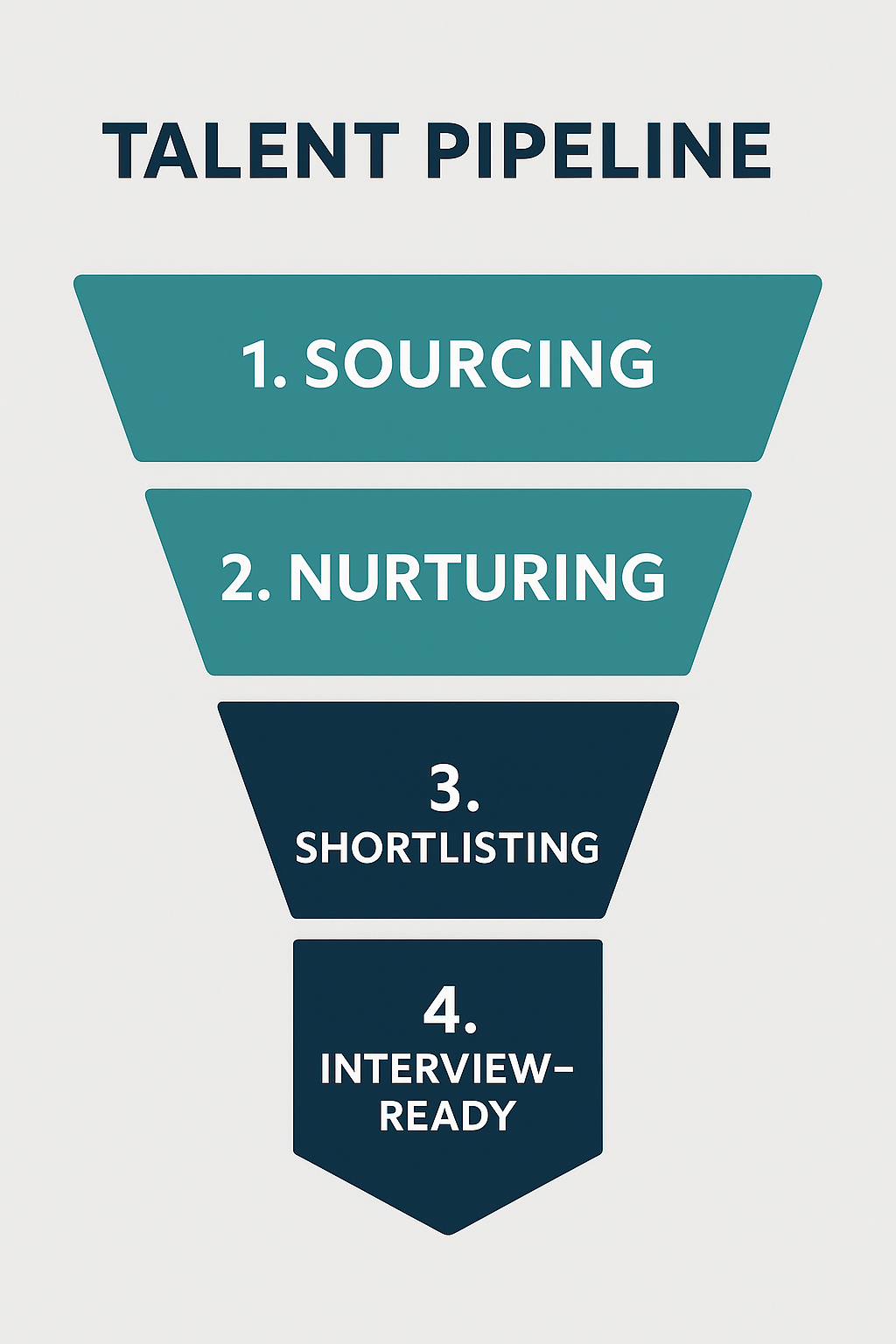
This proactive approach helps you find candidates before they’re even job seekers—and fill roles faster, without scrambling.
Structure Your Hiring Process From Day One
The most common cause of hiring delays? A lack of structure. When your hiring team improvises with each role, things fall through the cracks—candidates wait too long, feedback loops break down, and you lose out to faster competitors.
A structured hiring process ensures that everyone is on the same page from the start. Define your hiring process steps, assign owners to each stage, and build a consistent rhythm around how and when decisions are made.
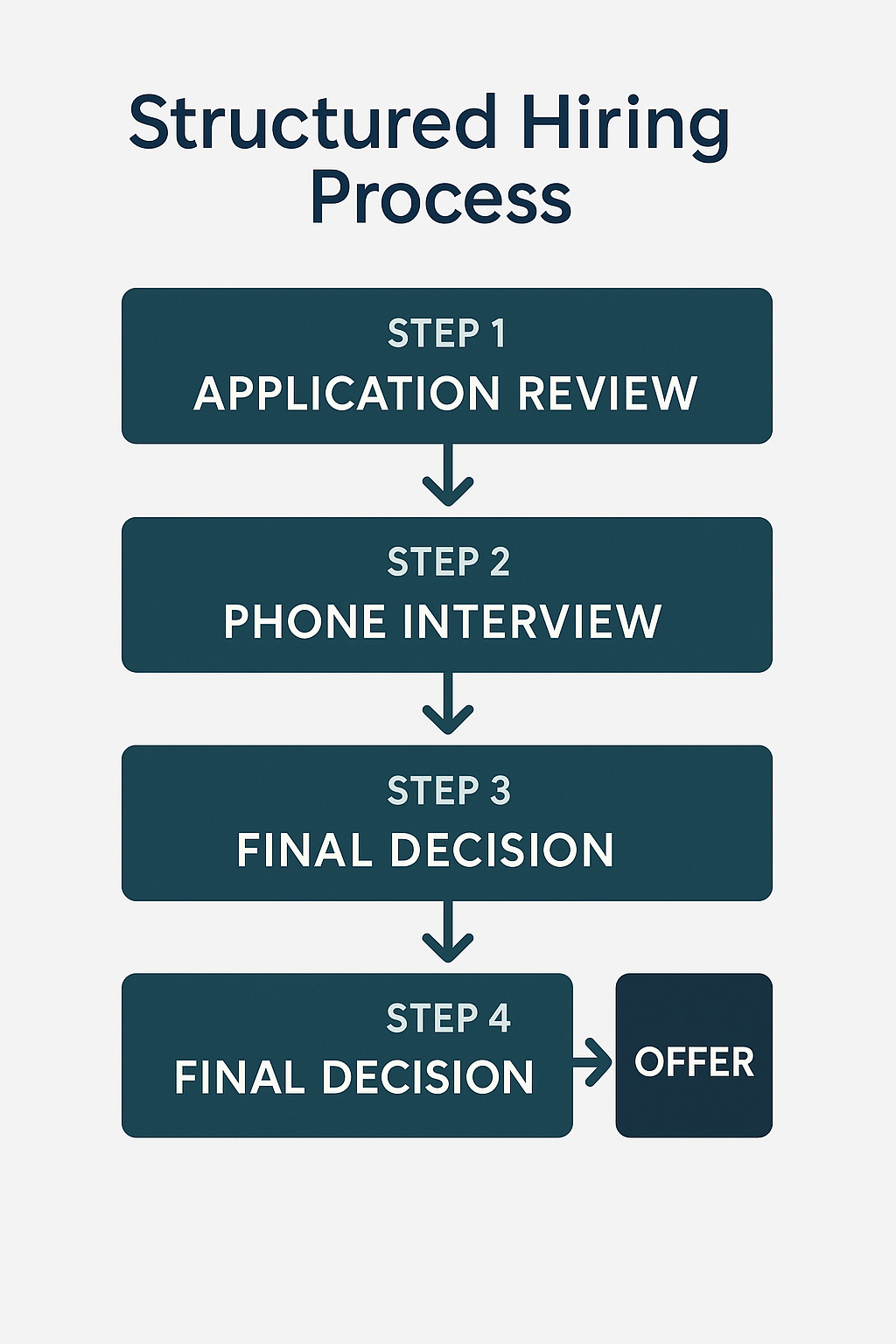
Instead of running three separate one-on-ones, consider using a panel or group format during the in-person interview stage. This cuts down on redundant meetings and speeds up internal consensus.
Consistency also leads to fairness. When all candidates are evaluated using the same criteria, you’re not only faster—you’re better. Structuring the whole process leads to greater efficiency and better outcomes for both your team and your candidates.
Automate the Repetitive Work
Your team’s time is too valuable to be spent on admin tasks. If you’re still manually sending out interview invites or sorting through resumes, it’s time to rethink the system.
A good application tracking system (ATS) can handle the bulk of your repetitive tasks—like screening candidates, scheduling interviews, and sending follow-up emails. This frees your HR team to focus on what matters most: connecting with top talent.
Automation also increases consistency. With predefined workflows, every candidate gets the same treatment and communication, leading to a more polished candidate experience.
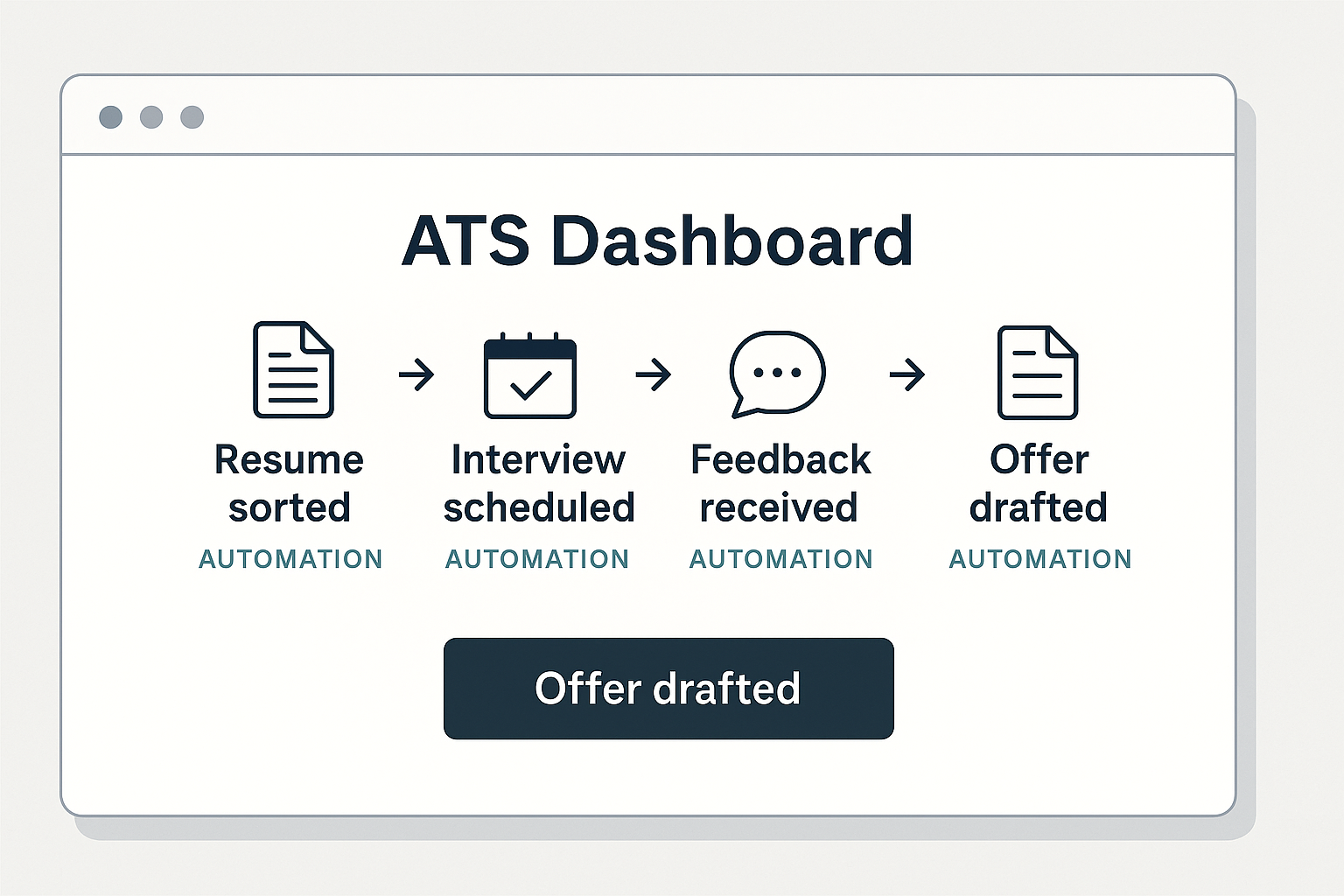
Bonus: Many ATS platforms now integrate with talent databases, letting you quickly search and surface previously screened candidates who might be a fit for new openings.
Let tech do the heavy lifting—so your people can focus on people.
Eliminate Bottlenecks in the Approval Chain
You’ve found your ideal candidate, everyone’s excited—and then the process stalls. Why? Because the offer is sitting in someone’s inbox waiting for sign-off.
Approval delays are one of the most common breakdowns in the hiring cycle. And in a competitive job market, even a 48-hour delay can cost you the perfect candidate.
Avoid this by setting clear expectations with every hiring manager and decision-maker upfront. Who needs to approve what—and by when?
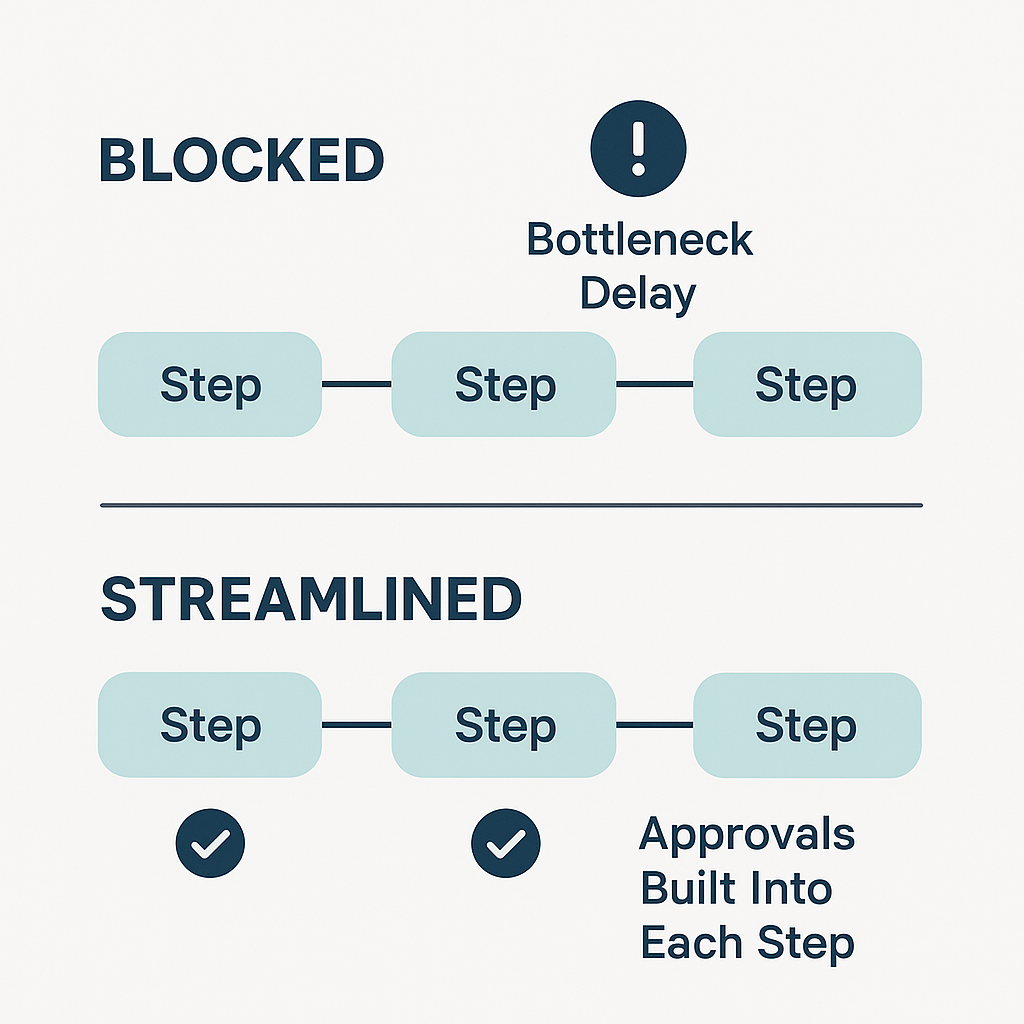
Establish a timeline for every part of the entire process, including how long each stage should take and where approvals fit in. Ideally, this is discussed before the role is even posted.
Need faster alignment? Create a simple escalation plan. If one person isn’t available, who steps in? Make those decisions early, not mid-offer.
Clear approval processes help speed up the hiring and reduce the risk of losing top candidates to unnecessary delays.
Keep Candidates Informed Throughout
Want to avoid ghosting? Keep your job candidates in the loop. Silence during the hiring process sends the wrong signal—and often leads top talent to accept other offers. Candidates are often considering multiple jobs at once, so timely communication is even more important.
Clear communication is a competitive advantage. When candidates know what to expect—and when—they’re more likely to stay engaged, show up for interviews, and view your company positively (even if they don’t get the job).
![Timeline graphic titled “Hiring Process Timeline” showing three evenly spaced stages: Application Received, Interview Scheduled, and Decision by [X Date]. Each stage is marked by a navy-blue icon and connected with a horizontal teal line for visual clarity.](https://images.surferseo.art/687304d5-173a-4177-a2b5-e675de6e7f59.png)
Build communication checkpoints into your hiring process steps. Let candidates know:
- When they’ll hear back
- What comes next (e.g., initial interview, in-person interview stage, final decision)
- Who their main point of contact is
This helps you move the process forward in a timely manner—without leaving anyone wondering if they’ve been forgotten.
Even a quick status email makes a big difference to the overall candidate experience.
Improve the Interview Process
A slow or unstructured interview process is one of the quickest ways to lose top talent to faster-moving competitors. To avoid that, your hiring managers need a system that’s both efficient and fair—one that consistently brings the right people through your pipeline without unnecessary delays.
Start by designing a structured hiring process that uses the same criteria and questions across candidates. This reduces bias, accelerates decision-making, and ensures you’re hiring for both skill and culture fit.
Use a thoughtful combination of phone interviews, video calls, and final in-person interview stages. At every step, pre-employment tests and behavioral assessments (like OAD’s) can reveal core competencies and help you make more confident, data-backed decisions in a timely manner.
Just as important: keep candidates informed throughout the process. Prompt feedback and clear communication improve the overall candidate experience—and keep your brand top of mind, even if they’re weighing multiple offers.
When your interview process runs smoothly, you don’t just move faster—you hire better.
Track What’s Working — and What’s Not
A fast hiring process isn’t just built—it’s refined. The most effective teams regularly analyze their performance using all the data available.
Start by tracking metrics like:
- Time to hire
- Applicant to interview ratio
- Offer acceptance rates
- Drop-off points in the application process
If you notice a high number of applicants but few interviews, your job description or screening process may need work. If candidates stall after the initial interview, it could be an issue with how your hiring team communicates expectations.
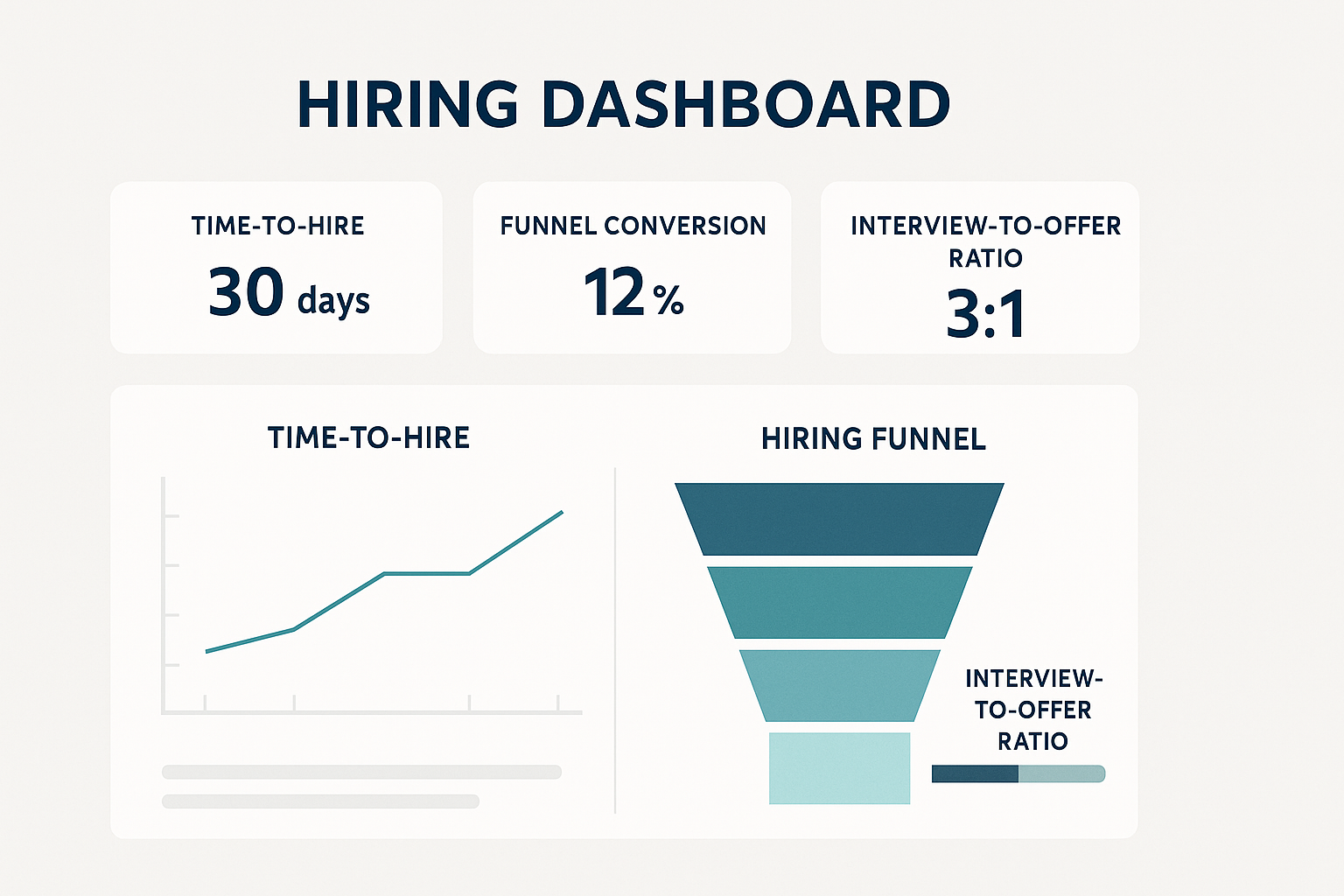
Use insights from your application tracking system, talent databases, and even candidate feedback to continuously improve. Tracking your process closely helps ensure you secure your top candidate before they accept another offer. This is how speed becomes sustainable—by turning one-time wins into repeatable systems.
Align Your Hiring Team Around One Goal
Even the best tools won’t save you if your hiring team is pulling in different directions. Misalignment leads to duplicated work, inconsistent communication, and unnecessary delays.
Before you post a single job listing, clarify:
- Who owns each step of the recruiting process
- What defines a “qualified candidate”
- How decisions will be made and documented
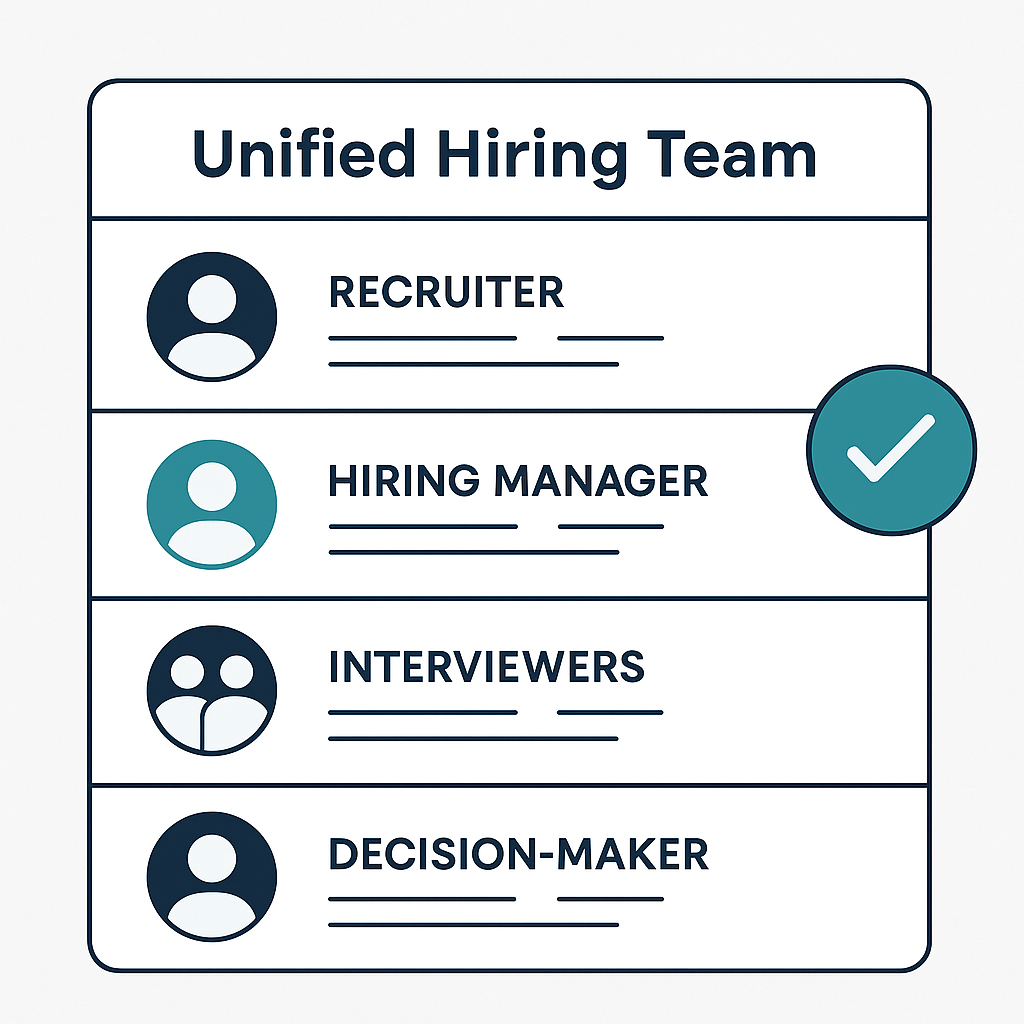
Schedule weekly or bi-weekly check-ins to keep everyone on the same page. If your team is fully aligned on what the perfect candidate looks like—and how to find them—you’ll move faster, make stronger offers, and improve your candidate satisfaction along the way.
This isn’t just about speed. It’s about building a process that scales.
Fast Doesn’t Mean Careless
Hiring faster isn’t about rushing—it’s about refining. With a structured process, clear communication, and the right data-driven tools, you can speed up the recruitment process while actually improving the quality of your hires.
If your competitors are already moving fast, hesitation will cost you the best candidates. But with OAD in your corner, you don’t have to choose between speed and precision.
Test OAD for free today to see how behavioral assessments can help you reduce time-to-hire while building a more effective, aligned hiring strategy.